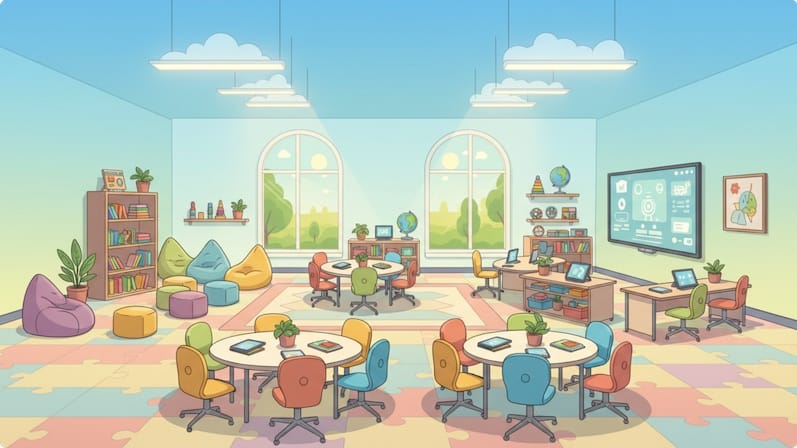
A classroom's physical setup directly affects how well students learn and how comfortable they feel throughout the day. The perfect classroom balances comfort and functionality by combining flexible seating, smart organization, and intentional layout choices that support both focus and collaboration.
Getting this balance right helps students stay engaged while giving teachers the tools they need to run an effective classroom.
Many teachers struggle with knowing where to start when setting up their learning space. The furniture needs to be comfortable enough for long periods of sitting and standing.
The layout needs to allow for different types of learning activities. Storage and supplies need to be easy to access without creating clutter.
This guide breaks down the essential elements of classroom setup into simple, actionable steps. Teachers will learn how to arrange desks for better engagement, choose furniture that supports student health, and organize materials so everything has its place.
Key Takeaways
- Balance comfort and functionality by choosing flexible furniture and intentional layouts that support various learning activities
- Organize classroom zones and storage systems to reduce clutter and make supplies easily accessible for both teachers and students
- Design seating arrangements and sight lines that encourage engagement while allowing teachers to monitor and support all students effectively
Key Principles of the Perfect Classroom Setup
A successful classroom setup requires careful attention to both physical comfort and practical design elements that support learning.
Teachers must consider how furniture choices, spatial arrangements, and environmental factors work together to create a space where students can focus and thrive.
Balancing Comfort and Functionality
The learning environment must serve multiple purposes throughout the school day. A functional classroom allows teachers to shift between different teaching methods without disruption.
This means creating zones for group work, independent study, and whole-class instruction. Flexible seating arrangements help accommodate various learning activities.
Desks and chairs should move easily to support both collaborative projects and individual tasks. Storage solutions need to keep materials organized while remaining accessible to students.
Comfort directly affects how long students can maintain focus. When students feel physically comfortable, they spend less time fidgeting and more time engaged with lessons.
The classroom setup should allow for movement while maintaining clear pathways and defined spaces for different activities.
Importance of Ergonomic Classroom Furniture
Students spend six to eight hours each day sitting in classroom furniture. Chairs and desks must support proper posture to prevent physical discomfort and fatigue.
Poorly designed furniture can lead to back pain, neck strain, and reduced concentration. Adjustable furniture works best because students vary in height and size.
Chairs should allow feet to rest flat on the floor with knees at a 90-degree angle. Desks need appropriate height so students can write without hunching their shoulders.
Ergonomic design extends beyond traditional seating. Standing desks, wobble stools, and cushioned floor seating give students options that match their comfort needs.
This variety helps students stay alert and focused during longer lessons.
Designing for Student Well-Being
The physical classroom directly impacts student well-being and academic performance. Natural lighting reduces eye strain and improves mood better than harsh fluorescent lights.
Temperature control matters because rooms that are too hot or cold make concentration difficult. Color choices affect the atmosphere of the learning environment.
Soft, neutral tones create calm spaces while bright accent colors can energize specific areas. Plants and personal touches make the classroom feel welcoming rather than institutional.
Organization reduces stress for both teachers and students. Clear labeling systems help students find materials independently.
Designated spaces for backpacks and personal items prevent clutter that creates visual distractions. A well-organized classroom setup supports emotional comfort by creating predictability and order.
Optimizing Classroom Layout and Organization
A well-planned classroom layout combines flexible furniture arrangements with clearly defined spaces and smart organization systems.
These elements work together to support different teaching methods while keeping materials accessible and distractions minimal.
Flexible Seating and Modular Arrangement
Flexible seating gives teachers the ability to change their classroom setup based on different activities throughout the day. Modular tables and stackable chairs make it easy to switch from individual work to group projects without wasting valuable class time.
Key furniture options include:
- Modular tables that connect or separate as needed
- Stackable chairs that store quickly when floor space is required
- Wheeled desks that students can move independently
- Adjustable-height tables for standing or sitting options
Teachers should assess their classroom layout every few months to match current teaching styles and student needs. A setup that works well for lectures might not support group work effectively.
The goal is to create a space where furniture can adapt rather than limit what happens during class time. Most classrooms benefit from keeping clear pathways between seating areas.
This allows teachers to move freely and reach students who need help. It also reduces disruptions when students transition between activities.
Defining Learning Zones for Engagement
Learning zones divide the classroom into specific areas that serve different purposes. This approach helps students understand what type of work happens in each space and reduces confusion about classroom expectations.
A reading nook with soft seating and good lighting creates a calm space for independent reading. A separate area with clustered desks or tables supports group work and collaboration.
A technology zone with outlets and proper cord management keeps devices organized and charging stations accessible.
Common learning zones include:
- Whole-class instruction area with clear sightlines to the board
- Small group work spaces with table clusters
- Quiet individual work areas away from high-traffic sections
- Resource stations for supplies and materials
Each zone should have a clear purpose that students can recognize. Visual boundaries like rugs, shelving units, or different furniture types help mark where one zone ends and another begins.
This setup supports student engagement by matching the physical space to the type of learning activity.
Strategies for Effective Classroom Organization
Classroom organization extends beyond furniture placement to include how materials are stored and accessed. A well-organized system prevents lost class time and supports classroom management by reducing chaos.
Storage solutions that work:
| Strategy | Purpose |
|---|---|
| Label all containers and shelves | Students find and return items independently |
| Use color-coded bins by subject | Quick identification of materials |
| Create supply stations around the room | Reduces crowding at one location |
| Store frequently used items at student height | Promotes self-sufficiency |
Teachers should place everyday supplies where students can reach them without asking for help. This includes pencils, paper, tissues, and other basics.
Less common items can go in higher storage or closed cabinets. A designated spot for turning in completed work keeps papers organized and prevents them from getting lost.
Similarly, a system for distributing handouts saves time at the start of lessons. These small organizational choices add up to more time spent on actual learning rather than managing materials.
Frequently Asked Questions
Classroom design directly affects how students learn and interact with their environment. Teachers need practical answers about furniture choices, layout options, and ways to support different learning needs.
How does classroom design influence student engagement and learning outcomes?
Physical classroom setup shapes student attention and participation levels throughout the school day. Poor lighting, cramped spaces, and uncomfortable seating create distractions that pull focus away from lessons.
Students struggle to concentrate when their environment works against them. Well-designed classrooms reduce these barriers and help students stay on task.
Clear sightlines to the board, adequate personal space, and comfortable temperatures let students focus on learning instead of physical discomfort. Research shows that thoughtful room arrangements can improve test scores and classroom behavior.
The layout also sends messages about how learning should happen. Desks in rows suggest individual work, while clustered tables indicate group activities.
Students respond to these visual cues and adjust their behavior accordingly.
What are the essential elements to consider when planning a modern high school classroom layout?
Flexible seating options rank as a top priority for high school spaces. Teenagers need chairs that support proper posture during long class periods.
Desks should accommodate laptops and textbooks without feeling crowded. Storage solutions must handle the volume of materials high school students use daily.
Cabinets, shelves, and bins keep supplies organized and accessible. Clear storage systems save instructional time that would otherwise be lost to searching for materials.
Technology infrastructure requires careful planning in modern classrooms. Outlets and charging stations need to be distributed throughout the room.
The layout should allow students to use devices without tangled cords creating tripping hazards. Traffic flow matters more than many teachers initially realize.
Students need clear paths to reach their seats, the teacher's desk, and common areas. Bottlenecks near the door or supply stations waste time and create management issues.
Can you provide examples of innovative classroom setups that enhance collaborative learning?
Station rotation models divide the classroom into distinct zones for different activities. One area might have tables for group discussions, another features individual work desks, and a third provides technology stations.
Students move between these spaces during class based on the task at hand. The fishbowl arrangement places a small circle of chairs in the center with larger circles around it.
Students in the middle discuss a topic while others observe and take notes. This setup works well for debates and Socratic seminars.
Standing desks and wobble stools give students movement options during group work. Some classrooms include comfortable floor seating with cushions for reading groups.
These varied seating choices let students select what helps them focus best. Makerspace corners incorporate hands-on materials and building supplies.
Students gather at these areas for project-based learning activities. The space encourages experimentation and creative problem-solving.
What are the four C's in education, and how can they be integrated into classroom design?
The four C's are critical thinking, communication, collaboration, and creativity. These skills prepare students for modern workplaces and life challenges.
Classroom design can actively support development of each skill. Critical thinking thrives in spaces with visible problem-solving tools.
Whiteboards on multiple walls let students work through ideas together. Display areas showcase student work and prompt questions about different approaches to assignments.
Communication improves when students can easily see and hear each other. Classroom acoustics matter for productive discussions.
Furniture arrangements that allow eye contact between speakers support better conversations. Collaboration requires spaces where students can work together without disturbing others.
Small group tables positioned away from quiet work areas create natural zones. Mobile furniture lets teachers reconfigure the room quickly for different collaborative activities.
Creativity needs dedicated space and materials. Art supplies, building materials, and tools should be accessible when students need them.
Display areas that celebrate creative work encourage students to take risks and share ideas.
How can classroom design accommodate diverse learning styles and needs?
Quiet zones provide space for students who process information best through independent work. These areas use dividers or positioning to minimize visual and auditory distractions.
Comfortable seating in quiet zones helps students who need calm environments to focus. Sensory considerations matter for students with different needs.
Adjustable lighting helps those sensitive to bright fluorescents. Noise-canceling headphones should be available for students who struggle with classroom sounds.
Multiple presentation formats support varied learning preferences. Some students learn best from visual displays, while others need hands-on materials.
Classrooms should include bulletin boards for visual information, manipulatives for tactile learners, and clear audio for auditory processors. Accessibility requirements must be built into the layout from the start.
Wide aisles accommodate wheelchairs and walkers. Adjustable-height desks serve students of different sizes and those with physical needs.
What strategies can teachers employ to create a versatile classroom layout that adapts to various teaching methods?
Mobile furniture provides the most flexibility for changing layouts. Desks on wheels can shift from rows to clusters in minutes.
Lightweight chairs stack easily when floor space is needed for activities.
Modular storage units serve multiple purposes throughout the room. They can act as space dividers, display areas, or simple storage depending on current needs.
Units on casters move to create temporary workstations or reading nooks.
Color coding helps organize materials for quick transitions. Different colored bins might hold supplies for specific activities or subjects.
Students learn the system and can set up or clean up efficiently.
Digital tools reduce physical clutter while maintaining versatility. Projectors and screens eliminate the need for multiple bulletin boards.
Cloud storage means fewer papers and filing cabinets taking up valuable space.
Trial periods allow teachers to test layouts before committing. Trying an arrangement for two weeks reveals problems that aren't obvious initially.