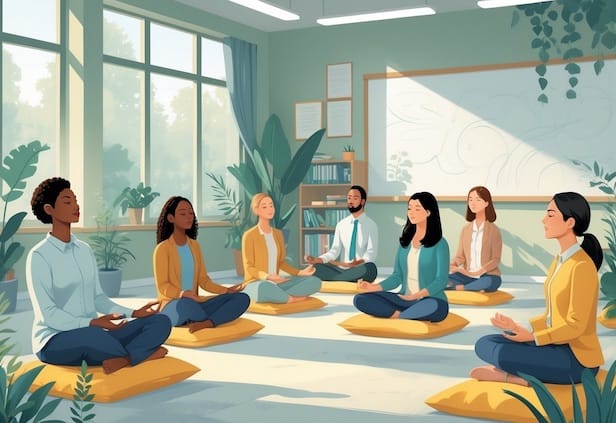
Teaching comes with constant demands that can drain even the most dedicated educator. Between managing classrooms, planning lessons, and supporting students with different needs, teachers face stress that builds up over time.
Mindfulness and meditation practices give teachers practical tools to manage stress, stay present in the classroom, and respond to challenges with more clarity and calm. These techniques don't require hours of training or special equipment.
Research shows that teachers who practice mindfulness notice real changes in how they handle their daily work. They become more aware of their emotions before reacting to difficult situations.
They communicate more clearly with students. They also feel less burned out and find more satisfaction in their jobs.
The practices work by training the mind to focus on the present moment without judgment.
This article explains specific mindfulness and meditation techniques that fit into a teacher's busy schedule. It covers simple breathing exercises, body scans, and awareness practices that take just a few minutes.
Teachers will learn how to use these tools for themselves and how to bring mindful moments into their classrooms to support student learning.
Key Takeaways
- Mindfulness helps teachers manage stress and respond to classroom challenges with greater awareness and control
- Simple practices like focused breathing and body scans can be done in just a few minutes and fit into daily routines
- Teachers can use mindfulness techniques for personal well-being and create calm, focused classroom environments that support learning
Understanding Mindfulness and Meditation for Teachers
Mindfulness practice helps teachers develop self-awareness and manage classroom stress through focused attention on present moments. These practices build essential skills for recognizing emotions, improving communication, and creating better learning environments.
What Is Mindfulness?
Mindfulness is the practice of paying attention to the present moment with openness and without judgment. It comes from Buddhist meditation traditions but has been adapted for modern education settings.
Teachers use mindfulness to notice their thoughts, feelings, and physical sensations as they happen. This awareness helps them respond thoughtfully instead of reacting automatically to classroom challenges.
The practice involves three key elements:
- Present-moment focus: Directing attention to what is happening right now
- Non-judgmental observation: Noticing experiences without labeling them as good or bad
- Intentional awareness: Choosing where to place attention consciously
Teachers can practice mindfulness while teaching, during breaks, or through formal sessions. Even brief moments of mindful attention make a difference in how educators handle daily demands.
Core Principles of Mindfulness in Education
Self-awareness forms the foundation of mindfulness for teachers. Educators who understand their emotional patterns can manage reactions before they affect students.
Key principles include:
- Acceptance of present reality: Recognizing classroom situations as they are, not as teachers wish them to be
- Compassionate observation: Viewing student behavior with curiosity rather than frustration
- Emotional regulation: Managing stress responses through conscious awareness
Teachers apply these principles by monitoring their internal states during lessons. When frustration builds, mindfulness practice allows them to pause and choose appropriate responses.
This skill proves particularly valuable with difficult students or high-pressure situations. The practice also helps educators appreciate positive teaching moments.
By staying present, teachers notice when students show engagement, creativity, or kindness.
Mindfulness vs. Meditation
Mindfulness and meditation are related but distinct practices for teachers. Mindfulness is a quality of awareness that can happen anytime during daily activities.
Meditation is a structured practice that trains the mind to develop mindfulness. Mindfulness meditation involves sitting quietly and focusing attention on specific anchors like breath or body sensations.
Teachers practice this formally during dedicated times outside the classroom.
| Practice Type | When It Happens | Duration | Purpose |
|---|---|---|---|
| Mindfulness | During any activity | Continuous | Moment-to-moment awareness |
| Meditation | Scheduled sessions | 5-30 minutes | Training attention skills |
Teachers can be mindful while teaching, grading papers, or talking with students. Meditation sessions build the mental muscles that make classroom mindfulness easier.
Both practices strengthen each other and support better teaching.
Benefits of Mindfulness Practices for Teachers
Mindfulness practices offer teachers practical tools to manage the daily pressures of education while improving their professional skills. These benefits range from stress reduction and emotional balance to stronger classroom relationships and heightened awareness during teaching moments.
Reducing Teacher Stress and Burnout
Teacher stress stems from multiple sources including high-stakes testing, classroom management challenges, and heavy workloads. Mindfulness meditation helps teachers recognize stress patterns before they escalate into burnout.
Regular mindfulness practice trains teachers to notice physical tension and mental strain as they occur. This awareness allows educators to take small breaks or adjust their responses rather than accumulating stress throughout the day.
Teachers who practice mindfulness report feeling less overwhelmed by their responsibilities. The practice also creates mental distance from stressful situations.
Instead of reacting immediately to classroom disruptions or administrative demands, teachers can pause and choose more effective responses. This shift reduces the emotional exhaustion that drives many educators to leave the profession.
Mindfulness techniques like focused breathing take only a few minutes but provide measurable relief from anxiety and tension. Teachers can use these methods between classes, during planning periods, or even in the middle of challenging moments.
Enhancing Emotional Well-Being and Regulation
Emotional regulation improves significantly when teachers develop mindfulness skills. The practice helps educators identify their emotional patterns and understand what triggers negative reactions.
Teachers often face situations that provoke frustration, anger, or disappointment. Mindfulness creates space between the trigger and the response.
An educator might notice irritation building when a student misbehaves but can choose a calm approach rather than snapping at the child. This awareness extends to positive emotions as well.
Mindful teachers report experiencing more joy and satisfaction from successful lessons and meaningful student connections. They learn to savor these moments instead of rushing past them to the next task.
Key emotional benefits include:
- Better recognition of emotional states as they arise
- Reduced reactivity to student behavior
- Greater capacity to remain calm under pressure
- Increased appreciation for positive classroom experiences
The nonjudgmental aspect of mindfulness helps teachers avoid guilt and shame about their emotional responses. They learn to observe feelings without criticism, which paradoxically makes those feelings easier to manage.
Boosting Teaching Effectiveness and Empathy
Mindfulness directly impacts teaching effectiveness by improving attention and presence in the classroom. Teachers who practice mindfulness notice more about their students' needs, engagement levels, and learning challenges.
This heightened awareness helps educators adjust their teaching methods in real time. A mindful teacher might observe students losing focus and recognize the need to shift activities or slow the pace.
They catch small issues before they become major disruptions. Empathy toward students grows through mindfulness practice.
Teachers begin to see misbehavior as a signal of unmet needs rather than personal attacks. A student acting out might be seeking attention, struggling with trauma, or feeling overwhelmed rather than deliberately causing trouble.
Understanding these underlying motivations allows teachers to respond with compassion and appropriate support. This approach builds trust and strengthens teacher-student relationships.
Mindful teachers also communicate more clearly. They pay attention to their word choices, tone, and body language, ensuring their messages land as intended.
Strengthening Self-Awareness and Presence
Self-awareness forms the foundation of mindfulness practice for teachers. Educators develop the ability to observe their thoughts, habits, and automatic behaviors without judgment.
This awareness reveals unconscious patterns that may undermine teaching goals. A teacher might discover they rush through lessons due to anxiety about finishing the curriculum.
Another might notice they call on certain students more frequently or use phrases that signal instructions are optional. Presence in the classroom means bringing full attention to the current moment rather than worrying about past lessons or future planning.
Students respond positively when teachers genuinely focus on them. Even brief moments of full attention send the message "I see you" to individual students.
Mindful self-awareness also helps teachers recognize their own needs. They learn when they need to pause, when they are becoming depleted, and when they need to adjust their classroom environment or teaching approach.
This self-knowledge prevents many problems before they start. Teachers who cultivate presence model valuable skills for their students.
They demonstrate what it looks like to pay attention, stay calm under stress, and approach challenges with curiosity rather than frustration.
Key Mindfulness and Meditation Techniques for Teachers
Teachers can use specific mindfulness and meditation techniques to manage stress and improve focus throughout their school day. These methods range from simple breathing exercises that take just a few minutes to more structured meditation practices that build emotional resilience.
Mindful Breathing and Breathing Exercises
Mindful breathing serves as the foundation for most meditation practices because it provides an immediate anchor to the present moment. Teachers can practice this technique anywhere, whether sitting at their desk between classes or standing in the hallway before a challenging lesson.
Box breathing offers a structured approach that regulates the nervous system. Teachers inhale for four counts, hold for four counts, exhale for four counts, and pause for four counts before repeating the cycle.
This technique creates immediate mental clarity and reduces physical tension. Diaphragmatic breathing focuses on deep belly breaths rather than shallow chest breathing.
Teachers place one hand on their chest and one on their abdomen, then breathe deeply so the lower hand moves while the upper hand stays relatively still. This activates the body's natural relaxation response.
A simple mindful breathing exercise involves taking three deliberate breaths while noticing the sensation of air moving in and out. Teachers can use this quick reset during transitions, before meetings, or when they notice stress building.
Guided and Mindful Meditation Practices
Guided meditation provides structure for teachers new to meditation or those who prefer external support. These practices use audio recordings or apps that lead participants through specific meditation sequences.
Mindfulness meditation teaches teachers to observe their thoughts without judgment. They sit comfortably, focus on their breath, and gently redirect attention back when their mind wanders.
Even five to ten minutes of daily practice builds the mental muscle needed for classroom composure. Loving-kindness meditation helps teachers develop compassion for themselves and their students.
The practice involves silently repeating phrases like "May I be calm" or "May my students feel safe." This technique proves especially valuable after difficult classroom interactions.
Teachers can practice open awareness meditation by sitting quietly and noticing whatever arises—sounds, sensations, emotions, or thoughts—without trying to change anything. This builds the capacity to remain present during unpredictable classroom moments.
Body Scan and Somatic Awareness Methods
Body scan meditation systematically brings attention to different parts of the body, helping teachers identify and release physical tension they might not consciously notice. This practice typically starts at the head and moves down to the toes, though the order can vary.
Teachers begin by noticing sensations in their scalp and face, then move attention to their neck and shoulders where stress often accumulates. They continue through their torso, arms, hands, legs, and feet, spending 20 to 30 seconds on each area.
Quick body scans work well during three-minute breaks. Teachers close their eyes, take a deep breath, and mentally sweep through their body, releasing tension in areas that feel tight.
The jaw, shoulders, and hands commonly hold stress that teachers can consciously relax. Somatic awareness practices help teachers notice the physical signals of stress before they escalate.
By regularly checking in with bodily sensations throughout the day, teachers can catch early warning signs like a clenched jaw or tense shoulders and address them immediately.
Practical Mindfulness Activities and Exercises
Teachers can use simple mindfulness exercises throughout their day to reduce stress and stay present. These practices range from brief breathing techniques to structured reflection activities that take just minutes to complete.
Mindfulness Exercises for Daily Teaching
Breathing exercises form the foundation of daily mindfulness practice. The three-breath reset helps teachers pause and regain focus in under 60 seconds.
A teacher inhales deeply through the nose, holds briefly, and exhales slowly through the mouth. This activates the body's relaxation response and reduces immediate stress.
Body scan practices allow teachers to check in with physical tension. During a prep period or lunch break, they can sit quietly and bring attention to different body parts.
Starting with the feet and moving upward, they notice areas of tightness in the shoulders, neck, and jaw where stress often accumulates. Mindful transition moments turn routine actions into opportunities for awareness.
Walking between classrooms becomes a chance to feel feet touching the floor. Erasing the whiteboard transforms into a sensory experience.
These micro-practices prevent stress from building throughout the day without requiring extra time. Teachers can also practice mindful listening during student interactions.
This means giving complete attention when a student speaks, without planning a response or checking devices. The practice strengthens relationships and helps students feel genuinely heard.
Classroom-Focused Mindfulness Activities
Guided meditation sessions can begin with just two to three minutes. Teachers lead students through simple breathing awareness, asking them to notice air moving in and out.
Nature sounds or soft music can support the practice for students who need auditory anchors.
Spidey-senses activities engage all five senses. Students identify what they see, hear, smell, taste, and feel in the present moment.
This grounds them before tests or after transitions between activities.
Intention-setting exercises help students focus at the start of class. Each student silently chooses one quality they want to bring to their work, such as patience or curiosity.
Teachers model this by sharing their own intentions.
Breathing buddies use small stuffed animals placed on students' stomachs while lying down. As they breathe, students watch their buddy rise and fall.
This makes breathing visible and engaging for younger learners.
A calm classroom environment supports these mindfulness activities. Dedicated quiet spaces, soft lighting, and minimal visual clutter create conditions where students can practice effectively.
Gratitude Journaling for Reflection
Gratitude journaling trains the mind to notice positive moments from the teaching day. Teachers write three specific things that went well each afternoon or evening.
Instead of vague entries, they record details like "a struggling reader volunteered to read aloud" or "a colleague brought coffee during my prep period."
Teachers can keep journals in various formats. A simple notebook works well.
Digital options include apps or word processing documents. The format matters less than consistency.
Reflection prompts deepen the practice. Teachers can write about what they learned from a challenging situation or how a student surprised them.
They might describe a moment when they felt genuinely connected to their purpose.
Some teachers create gratitude walls in staff lounges where colleagues post appreciation notes. Others begin staff meetings by sharing professional wins from the week.
These collective practices build supportive school cultures and remind teachers they are not alone in their experiences.
Integrating Mindfulness into the School Environment
Schools can create lasting change by weaving mindfulness practices into daily routines, classroom activities, and schoolwide initiatives. Teachers play a central role in modeling these techniques and helping students develop skills that support both learning and emotional well-being.
Fostering Mindfulness in Classrooms
Teachers can transform their classrooms by creating spaces that support calm and focused learning. Simple changes make a difference.
Adding a quiet corner with cushions gives students a place to reset when they feel overwhelmed. Displaying visual cues like breathing reminders or calming images helps students remember to pause during stressful moments.
Starting each class with a brief mindfulness activity sets a positive tone. A two-minute breathing exercise or body scan helps students transition into learning mode.
Teachers can also use mindful transitions between activities, asking students to take three deep breaths before moving to the next task.
Research shows that classrooms using mindfulness techniques experience fewer behavioral disruptions. Students learn to recognize their emotions and respond thoughtfully instead of reacting impulsively.
Teachers who practice mindfulness themselves create more supportive environments because they model the calm presence students need.
Key classroom strategies include:
- Opening or closing class with breathing exercises
- Using mindful listening activities during lessons
- Taking stretch breaks with gentle movement
- Practicing gratitude sharing once per week
Teaching Mindfulness to Students
Teaching mindfulness to students requires age-appropriate techniques that fit naturally into existing lessons. Young children benefit from simple activities like listening to sounds or noticing their breathing.
Older students can handle more complex practices like body scans or guided visualizations.
Teachers should introduce mindfulness gradually. Starting with just five minutes allows students to build comfort with the practices.
Clear instructions matter. Explaining what students will experience helps them understand that wandering thoughts are normal and part of the process.
Mindfulness activities work best when they connect to real classroom situations. Before a test, students can practice calming techniques.
During group work, they can use mindful listening to improve communication. After recess, a brief settling activity helps students refocus on learning.
Students develop self-awareness through regular practice. They learn to notice when stress builds and use tools to manage it.
These skills improve attention spans and help students handle anxiety more effectively.
Promoting Mindfulness in Schools
School leaders can support mindfulness by making it part of the school culture rather than an isolated activity. Training programs give teachers the skills and confidence they need to implement mindfulness practices effectively.
Professional development should include both personal practice time and practical classroom strategies.
Schools benefit from creating schoolwide routines. A mindful moment during morning announcements or before assemblies helps everyone start together.
Some schools designate quiet spaces where students and teachers can practice mindfulness throughout the day.
Building a mindfulness community among staff strengthens implementation. Teachers who meet regularly to share experiences and challenges create a support network.
This collaboration helps sustain practices over time and prevents burnout.
Effective schoolwide approaches:
- Offering mindfulness training for all staff members
- Scheduling regular practice times during the school day
- Creating dedicated spaces for mindfulness activities
- Sharing resources through school platforms
- Encouraging parent involvement through workshops or take-home materials
Frequently Asked Questions
Teachers who explore mindfulness and meditation often have practical questions about implementation, benefits, and resources. These answers address common concerns about incorporating these practices into both personal routines and classroom environments.
How can mindfulness practices enhance teaching performance in the classroom?
Mindfulness practices help teachers maintain focus and emotional stability during challenging classroom situations. Research shows that educators trained in mindfulness demonstrate lower blood pressure, fewer symptoms of depression, and greater compassion toward students.
Teachers who practice mindfulness develop stronger abilities to manage their reactions to disruptive behavior. This awareness allows them to respond thoughtfully rather than react impulsively when conflicts arise.
The practice improves a teacher's capacity to stay present during lessons. Mindful educators can direct their full attention to current classroom dynamics and student needs.
What are effective mindfulness activities that teachers can easily integrate into their daily routine?
Mindful breathing serves as the most accessible practice for busy teachers. Taking five minutes in the morning or between classes to focus on breath patterns helps reset the nervous system and reduce stress levels.
Body scan meditation offers another practical option that requires no special equipment. Teachers can practice this technique while sitting at their desk, systematically noticing sensations throughout the body from head to toe.
Setting daily intentions takes less than two minutes but creates purposeful direction. Teachers can identify specific goals for how they want to show up emotionally and mentally before the school day begins.
Short walking meditations during lunch breaks combine movement with awareness. Teachers simply focus on the physical sensations of walking, noticing each step and the surrounding environment without judgment.
What are the benefits of mindfulness training for educators in managing stress?
Mindfulness training directly addresses the high burnout rates in education, where more than half of all teachers report feeling burned out. Regular practice helps educators recognize stress signals early and respond with effective coping strategies.
The practice creates measurable changes in how the body handles stress. Studies show that just eight weeks of mindfulness training can boost immune system function and improve sleep quality among participants.
Teachers who complete mindfulness training report increased resilience when facing difficult students or administrative pressures. They develop skills to pause and choose their responses rather than acting on automatic stress reactions.
Mindfulness also reduces the physical symptoms of chronic stress. Practitioners experience lower blood pressure and decreased muscle tension, which prevents the long-term health problems associated with teaching stress.
How can teachers incorporate mindfulness techniques into their lesson plans?
Teachers can start class periods with brief breathing exercises that help students settle and focus. A simple two-minute practice where students notice their breath creates a calm transition into learning activities.
Mindful listening activities work well after high-energy transitions like recess or group work. Using a bell or chime, teachers can guide students to listen until the sound completely fades, which naturally quiets the classroom.
Movement breaks that incorporate mindful awareness support both physical and mental health. Teachers can lead simple stretches or yoga poses where students pay attention to how their bodies feel during each position.
Gratitude practices fit naturally into morning meetings or end-of-day reflections. Students can share one thing they appreciate, which builds positive emotions and strengthens classroom community.
Where can educators find quality mindfulness resources suitable for professional development?
The Coalition of Schools Educating Mindfully provides an online community where teachers can connect with others implementing mindfulness programs. This network offers practical advice and shares successful strategies from real classroom experiences.
Mindful Schools designs specific programs created by educators for educators. Their professional development courses address the unique challenges teachers face and provide age-appropriate techniques for different grade levels.
CREATE for Education focuses specifically on teacher stress and burnout. This program equips educators with personal mindfulness skills that enhance their ability to lead effective classrooms while maintaining their own wellbeing.
Many universities now offer formal courses in mindfulness education. These certificate programs provide structured training in both the theory and practice of bringing mindfulness into educational settings.
Can mindfulness and meditation practices help in improving student-teacher relationships, and if so, how?
Mindfulness practices strengthen student-teacher relationships by developing emotional awareness and regulation skills. Teachers who practice mindfulness show greater empathy and compassion, which students perceive and respond to positively.
The practice improves communication between teachers and students. When educators understand their own thoughts and feelings more clearly, they can express themselves more effectively and listen more attentively to student concerns.
Teachers who practice nonjudgmental awareness can work more effectively with challenging students. Rather than reacting to difficult behavior with frustration, mindful teachers can reflect on underlying causes and respond with understanding.
Mindfulness creates a shared language and set of practices in the classroom. When teachers model these techniques and practice them alongside students, it builds connection through common experience.