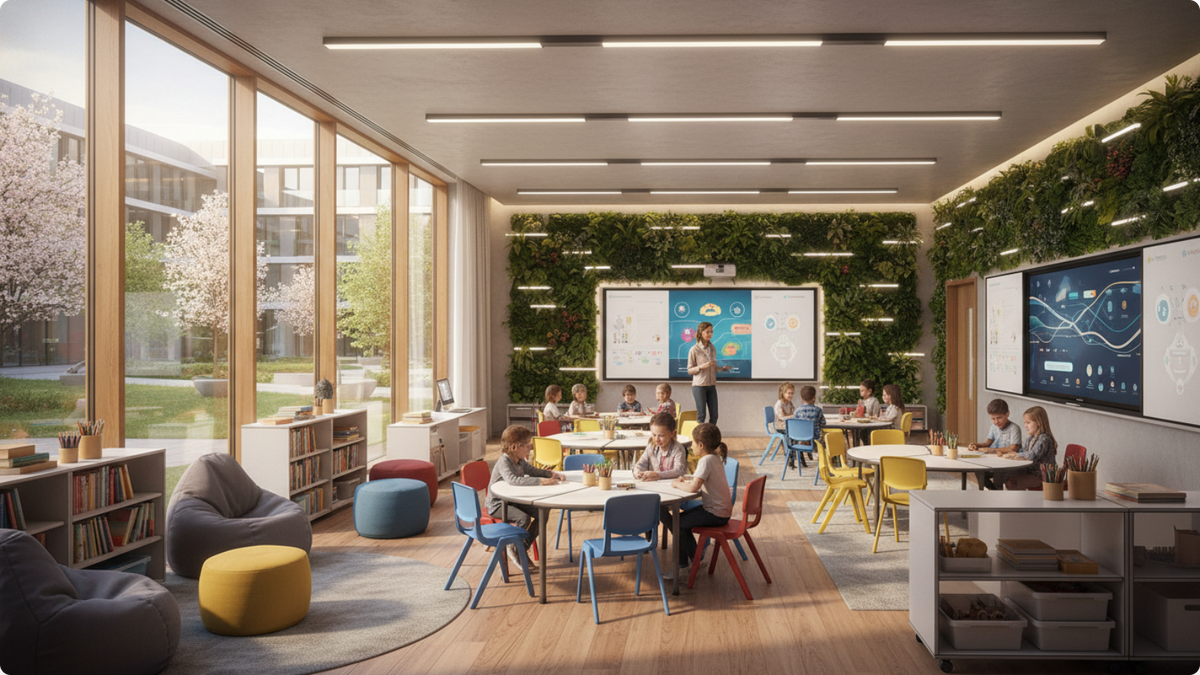
The classroom environment plays a major role in how well students learn and engage with lessons. A well-designed classroom balances physical comfort, clear organization, and flexible spaces that support different learning activities throughout the day.
When teachers set up their classrooms with purpose, students feel more focused and ready to participate. Many educators know their classroom setup matters, but they might not know where to start.
The right design considers how students move through the space, where they can focus best, and how the room can adapt to different teaching methods. Small changes to furniture placement, lighting, and storage can make a big difference in student success.
Creating an effective learning space doesn't require expensive materials or a complete makeover. Simple strategies help teachers build classrooms that reduce distractions, encourage independence, and make every student feel welcome.
The following guide breaks down practical steps any teacher can use to design a classroom that works for their students.
Key Takeaways
- Effective classroom design combines physical comfort, smart organization, and flexible spaces that adapt to different learning needs
- Small intentional changes to layout, seating, and storage can significantly improve student focus and engagement
- A well-planned classroom environment helps reduce distractions while building student independence and belonging
Key Principles of Effective Classroom Design
The physical setup of a classroom directly affects how students learn and perform. Teachers who understand core design principles can create spaces that boost engagement, support different learning styles, and improve academic outcomes.
Creating a Positive Learning Environment
A positive learning environment starts with intentional choices about color, lighting, and organization. Warm, neutral colors help students stay calm and focused during lessons.
Natural light improves mood and attention spans better than harsh fluorescent lighting. Key elements include:
- Clear sight lines so all students can see instructional areas
- Designated zones for different activities
- Minimal visual clutter to reduce distractions
- Personal touches like student work displays
Teachers should arrange furniture to encourage interaction while maintaining order. Creating distinct areas for group work, independent study, and whole-class instruction helps students understand expectations for each activity.
The emotional tone matters as much as the physical setup. Spaces that feel welcoming and safe allow students to take academic risks without fear of judgment.
Impact of Physical Space on Student Outcomes
Research shows that classroom design has measurable effects on student learning outcomes. Poor layouts can reduce focus and participation.
Well-designed spaces lead to better test scores and classroom behavior. Temperature control affects concentration.
Rooms that are too hot or too cold make it hard for students to pay attention. Proper ventilation keeps minds alert throughout the day.
Acoustics play a vital role in comprehension. Hard surfaces create echo and noise that make it difficult to hear instructions.
Soft materials like rugs and wall panels absorb sound and improve speech clarity. Storage systems keep materials organized and accessible.
When students can easily find what they need, less time gets wasted on transitions between activities.
Flexible and Inclusive Seating Arrangements
Flexible seating gives students choices about where and how they work. Options might include traditional desks, standing tables, floor cushions, or stability balls.
Different students focus better in different positions. Seating arrangements should change based on the activity.
Rows work well for lectures. Clusters support group projects.
A circle promotes class discussions. Teachers need to consider accessibility for all learners.
Wheelchair users require wider pathways and appropriate desk heights. Students with sensory needs might benefit from quiet corners with reduced stimulation.
Effective seating strategies:
- Allow students to choose seats that match their learning preferences
- Rearrange furniture weekly to support different lesson types
- Ensure every student can see and hear from their position
- Provide movement breaks for students who struggle sitting still
Essential Elements for the Perfect Classroom Environment
The physical setup of a classroom directly affects how well students learn and stay focused. Key factors include proper lighting and temperature control, good air circulation, strategic use of visual displays, and smart integration of technology.
Optimizing Lighting and Temperature
Natural light improves student focus and reduces eye strain better than artificial lighting alone. Classrooms should have large windows with adjustable blinds to control glare and brightness throughout the day.
When natural light is limited, teachers need full-spectrum LED bulbs that mimic daylight. These lights reduce headaches and help students stay alert during lessons.
The lighting should be bright enough for reading but not harsh enough to cause discomfort. Temperature control plays a major role in student performance.
Research shows that students learn best in rooms kept between 68-74°F (20-23°C). Rooms that are too hot make students sleepy and unfocused.
Rooms that are too cold distract students and make it hard to concentrate. Teachers should place thermostats away from windows and heating vents to get accurate readings.
Students sitting near windows or doors may need extra adjustments to stay comfortable.
Ensuring Effective Ventilation and Air Quality
Good air circulation keeps students healthy and alert. Poor ventilation leads to higher CO2 levels, which causes drowsiness and reduces the ability to think clearly.
Classrooms need fresh air exchange at least 4-6 times per hour. Opening windows for 10 minutes between class periods helps refresh the air quickly.
Air purifiers with HEPA filters remove dust, allergens, and other particles that affect breathing. Teachers should check air vents monthly to make sure they are not blocked by furniture or supplies.
Plants like spider plants or pothos improve air quality naturally while adding visual appeal to the space.
Incorporating Visual Displays and Learning Zones
Visual displays help students understand concepts and stay engaged with lessons. Wall space should include student work, anchor charts, and educational posters that relate to current topics.
Too many displays create visual clutter that distracts rather than helps. Learning zones divide the classroom into areas for different activities.
A reading corner with soft seating encourages quiet focus time. A collaboration zone with grouped desks supports team projects.
A presentation area gives students space to share their work. Each zone needs clear boundaries and purposes.
Color-coded areas or floor tape help students understand where different activities happen. Flexible seating options like standing desks, floor cushions, and wobble stools allow movement breaks and accommodate different learning preferences.
Integrating Digital Resources and Technology
Interactive whiteboards serve as central teaching tools for displaying lessons, videos, and student presentations. These boards should be mounted at heights where all students can see clearly without straining their necks.
Digital resources like tablets and laptops need organized storage and easy access. Charging stations prevent device batteries from dying during lessons.
Clear rules about device use help maintain focus during instruction time. Technology placement matters for student engagement.
Screens should face away from windows to reduce glare. Power outlets need to be accessible without creating tripping hazards from cords.
A dedicated tech zone keeps devices organized and reduces distractions during non-digital activities. Teachers should balance digital and non-digital learning environments throughout the day.
Too much screen time causes eye fatigue, while strategic technology use enhances lessons and builds important skills.
Frequently Asked Questions
Classroom design involves many interconnected choices that impact how students learn, interact, and grow. Teachers often ask about layouts, student engagement, teaching methods, technology integration, and skill development when planning their spaces.
What are the key elements of an effective classroom layout for enhancing student learning?
An effective classroom layout starts with flexible seating arrangements that allow students to move between individual work, small groups, and whole-class instruction. Desks or tables should be positioned to give clear sightlines to the board and teacher while leaving enough space for movement throughout the room.
The teacher's position matters for monitoring and engagement. Placing the teacher's desk at the side or back of the room rather than the front allows for better circulation and student supervision during activities.
Storage and materials need clear organization and labels. Students should be able to access supplies independently without disrupting others or asking for help constantly.
Lighting affects focus and comfort. Natural light works best when available, supplemented by warm artificial lighting that reduces eye strain and creates a welcoming atmosphere.
Designated zones serve different purposes. A reading corner, group work area, and quiet workspace help students understand expectations for different activities and transition smoothly between tasks.
In what ways does classroom design affect student engagement and academic performance?
Physical arrangement directly influences how students participate in lessons. When desks face each other in clusters, students engage more in discussions and collaborative work compared to traditional rows.
Visual distractions reduce focus and learning. Cluttered walls, excessive decorations, and disorganized materials pull attention away from instruction and independent work.
Temperature and air quality impact concentration. Students struggle to focus in rooms that are too hot, too cold, or poorly ventilated, which leads to decreased academic performance.
Comfortable seating options increase time on task. Students who can choose between standing desks, floor cushions, or traditional chairs often stay engaged longer during lessons.
Color choices affect mood and behavior. Calm, neutral wall colors with strategic pops of color create an environment that feels both stimulating and focused rather than overwhelming or sterile.
What strategies can teachers employ to foster a positive and nurturing learning environment?
Building relationships forms the foundation of a positive classroom. Teachers should greet students by name at the door, learn about their interests, and show genuine care for their well-being beyond academics.
Clear expectations and consistent routines reduce anxiety. Students need to know what behaviors are expected, what consequences exist, and what the daily schedule looks like.
Celebrating effort over results encourages growth mindset. Display student work that shows improvement, acknowledge hard work publicly, and create a culture where mistakes are learning opportunities.
Creating inclusive spaces matters for all students. Display diverse voices in classroom materials, use culturally responsive teaching practices, and ensure every student sees themselves represented positively.
Student voice increases ownership and belonging. Allow students to contribute to classroom rules, choose some aspects of their learning, and provide regular feedback about what helps them succeed.
Emotional safety requires attention to social dynamics. Address conflicts promptly, teach social-emotional skills explicitly, and create opportunities for students to connect with peers in structured ways.
How can classroom settings be optimized to accommodate different styles of teaching and learning?
Moveable furniture allows quick transitions between teaching styles. Lightweight tables and chairs enable teachers to shift from lecture format to small group work to learning stations within minutes.
Multiple work areas support varied learning preferences. Some students need quiet corners for focus while others thrive in collaborative spaces with peers and conversation.
Adjustable elements meet different needs throughout the day. Standing desks, wobble stools, and floor seating give students options based on their energy levels and tasks.
Varied instructional spaces expand teaching possibilities. A carpet area for whole-class discussions, tables for hands-on projects, and individual desks for assessments let teachers match space to purpose.
Visual and auditory considerations help different learners. Provide noise-canceling headphones for sensitive students, use visual schedules for those who need structure, and offer manipulatives for hands-on learners.
What role does technology play in creating a modern and dynamic classroom environment?
Digital tools expand access to information and resources. Students can research topics independently, access multimedia content, and connect with experts beyond their classroom walls.
Interactive displays increase engagement during instruction. Smartboards and projectors allow teachers to show videos, annotate in real-time, and save notes for students who need extra review time.
Learning management systems organize materials and communication. Teachers can post assignments, share resources, and track student progress in centralized platforms that students access from any location.
Educational apps personalize learning paths. Students work at their own pace through adaptive programs that adjust difficulty based on performance and provide immediate feedback.
Collaboration tools prepare students for modern work. Cloud-based documents, video conferencing, and digital portfolios teach skills students will use beyond school while enabling group projects and peer feedback.
Device management requires intentional planning. Charging stations, cable organization, and clear policies about technology use prevent devices from becoming distractions or logistical problems.
What are the best practices for incorporating the 4 C's (Communication, Collaboration, Critical thinking, Creativity) into classroom design?
Communication thrives in spaces that encourage discussion. Arrange seating in circles or U-shapes for Socratic seminars.
Create presentation areas where students share work. Display sentence frames that support academic language.
Collaboration requires dedicated group work zones. Tables that seat four to six students work well for projects.
Writable surfaces on walls or tables let groups brainstorm and plan together.
Critical thinking needs visual thinking tools. Bulletin boards that display problem-solving steps are helpful.
Anchor charts showing thinking routines and question stems posted around the room prompt deeper analysis.
Creativity flourishes with a maker space or art area. Stock supplies for building, drawing, and creating.
Designate wall space where students can display innovative solutions and original work.
Clear expectations and modeling help students develop these skills. Post guidelines for group work.
Teach specific collaboration strategies. Provide rubrics that define what strong communication or creative thinking looks like in practice.