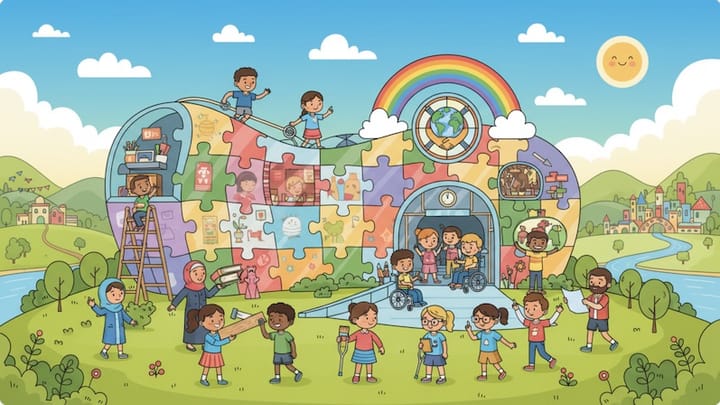
A chaotic classroom can drain energy from both teachers and students, making learning difficult and stressful. Many teachers struggle with disruptions, unclear expectations, and students who seem disengaged.
These challenges are common, but they can be fixed with the right approach. A well-designed classroom routine reduces disruptions, increases learning time, and helps students feel more secure and focused.
When teachers set clear expectations and build consistent daily patterns, students know what to expect. This predictability helps create a calm space where everyone can focus on learning instead of managing behavior problems.
Key Takeaways
- Clear expectations and consistent routines create a predictable classroom environment that reduces disruptions
- Building supportive relationships and using active learning strategies keeps students engaged and focused
- Regular reflection and adjustment of classroom practices helps teachers improve their management over time
Understanding the Shift From Chaos to Calm
A chaotic classroom drains time and energy from both teachers and students, while a calm environment builds the foundation for real learning. The path from disorder to structure depends on consistent routines that shape daily classroom life.
Why Classroom Routines Matter
Routines create a framework that helps students know what to expect each day. When students understand the flow of their day, they spend less time confused and more time focused on learning.
Research shows that effective classroom management can result in 30% more time spent on actual learning. This happens because routines reduce the need for constant directions and reminders.
Teachers also benefit from established routines. They can focus on teaching instead of managing repeated questions about basic procedures.
The classroom environment becomes more productive when everyone follows the same patterns each day.
Key routine areas include:
- Morning arrival and settling in
- Transitions between activities
- Material distribution and collection
- End-of-day procedures
Identifying Signs of a Disordered Classroom
A disordered classroom shows clear warning signs. Students may wander during work time or constantly ask what they should be doing next.
Excessive noise levels during independent work time signal a lack of structure. Materials scattered around the room create physical chaos that matches the behavioral chaos.
Papers pile up on surfaces, supplies go missing, and students waste time searching for what they need. Teachers in chaotic classrooms often repeat instructions multiple times.
They struggle to start lessons on time because students take too long to settle. Transitions between activities become lengthy and unfocused, eating into valuable learning time.
Frequent interruptions mark another sign of disorder. Students call out instead of raising hands, leave their seats without permission, or fail to follow basic procedures.
Benefits of a Predictable Learning Environment
A predictable learning environment reduces student anxiety and builds confidence. Students perform better when they understand expectations and feel secure in their surroundings.
The learning environment becomes a space where students can take academic risks without fear. Behavioral issues decrease significantly in structured classrooms.
Students spend less energy figuring out what comes next and more energy on actual learning tasks. Teachers can address individual student needs instead of managing constant disruptions.
The classroom environment transforms into a community where students help maintain order. They remind each other of routines and procedures, taking ownership of their shared space.
Academic achievement rises when students spend more time engaged in learning activities. Predictable routines free up mental space for students to focus on challenging content rather than basic procedures.
Establishing Clear Expectations
When teachers set clear boundaries and guidelines from the start, students know exactly what is expected of them. This clarity reduces confusion and creates a foundation for consistent student behavior throughout the year.
Collaboratively Setting Classroom Rules
Involving students in creating classroom rules builds ownership and increases the likelihood they will follow them. Teachers can start the year by leading a class discussion where students share what they think makes a good learning environment.
This process helps students feel heard and valued. The most effective approach is to keep rules simple and limited.
Aim for 3-5 broad expectations rather than an exhaustive list. Examples include "Respect others," "Follow directions quickly," and "Make smart choices."
Students should help explain the reasoning behind each rule. When they understand why a rule exists, they are more likely to follow it.
A teacher might ask, "Why do we need to raise our hands before speaking?" Students can then discuss how this ensures everyone gets a turn and feels respected.
After the collaborative discussion, teachers should write down the agreed-upon rules and have students sign them. This creates a visual commitment that reinforces accountability.
Communicating Guidelines Effectively
Once rules are established, teachers must communicate them clearly and repeatedly. Posting rules in visible locations around the classroom serves as a constant reminder.
Use simple language that matches students' reading levels, avoiding jargon or complex phrasing. Visual aids strengthen understanding.
Consider using:
- Posters with icons that represent each rule
- Color-coded charts that break down expectations by activity type
- Digital displays on interactive whiteboards that can be updated
Teachers should explicitly teach each rule through modeling and role-play. Demonstrate what following the rule looks like and what breaking it looks like.
Ask students to practice the correct behavior in realistic scenarios. Sharing expectations with parents creates consistency between home and school.
Send home a copy of classroom rules during the first week and explain how they will be reinforced.
Consistency With Reinforcement
Clear expectations only work when teachers apply them consistently. Students need to see that rules apply to everyone, in every situation, every day.
Inconsistent enforcement confuses students and undermines the entire system. Positive reinforcement strengthens desired student behavior.
Acknowledge when students follow rules by offering specific praise like "Thank you for raising your hand" rather than generic comments. Some teachers use systems like behavior charts or token economies to track positive choices.
When students break rules, consequences must be logical and fair. Address infractions calmly and privately when possible to avoid embarrassing the student.
The consequence should relate directly to the behavior and help the student learn from the mistake. Teachers should track behavior patterns to identify which rules need more teaching or adjustment.
If multiple students struggle with the same expectation, it may need to be retaught or clarified.
Building Effective Routines
Successful classroom routines require careful planning, clear instruction, and consistent practice. Teachers can transform their classroom environment by focusing on three key areas: creating structured procedures for daily tasks and transitions, demonstrating expectations through direct modeling, and maintaining routines through regular reinforcement.
Designing Daily and Transitional Procedures
Teachers should start by identifying the moments in their day that need the most structure. Morning arrival, transitions between subjects, bathroom breaks, and end-of-day dismissal are common areas where clear procedures prevent chaos.
Each routine needs specific, observable steps that students can follow easily. For example, a morning arrival routine might include: entering quietly, putting away belongings, completing an attendance task, and starting a warm-up activity.
Teachers should write these steps in simple language and display them where students can see them. Transition procedures deserve special attention because they often lead to disruptions.
A basic three-step transition works well: clean up current materials, wait for instructions, and move quietly to the next activity. Teachers can add a timer or signal to help students know when to begin.
The best procedures fit the specific needs of each classroom. Elementary students might need routines for sharpening pencils and using learning centers.
Older students benefit from procedures for group work, technology use, and handling completed assignments.
Modeling and Practicing Routines
Telling students about a routine is not enough. Teachers must show exactly what each step looks like in action.
They should walk through each routine themselves while students watch, explaining their thinking at each step. After modeling, students need time to practice.
Teachers should guide the whole class through the routine several times during the first week of implementation. They can have students practice entering the classroom, transitioning between activities, or following dismissal procedures until the actions become automatic.
Practice sessions work best when teachers provide immediate feedback. They should point out what students are doing correctly and gently correct mistakes.
Breaking complex routines into smaller parts helps students master each component before putting everything together. Teachers should expect routines to take longer at first.
The time invested in practice pays off later through smoother classroom management and less instructional time lost to confusion.
Reinforcing Routines Over Time
Routines need ongoing support to remain effective. Teachers should use specific praise when students follow procedures correctly, highlighting the exact behaviors they want to see continue.
Simple statements like "I noticed everyone moved to their reading groups quietly" reinforce expectations. Regular reminders help maintain routines, especially after weekends or breaks.
Teachers can review key procedures at the start of each week or before specific activities. Visual reminders posted in the classroom serve as reference points students can check independently.
When students struggle with a routine, teachers should revisit the modeling and practice steps rather than assuming students remember. They might need to adjust procedures that consistently cause problems or break them into simpler steps.
Flexibility allows teachers to refine their approach based on what actually works in their classroom environment.
Creating a Supportive Classroom Environment
A supportive classroom environment builds on strong relationships between teachers and students, creates spaces where emotions are safe to express, and helps students take charge of their own learning. These three elements work together to turn chaotic classrooms into calm, productive spaces.
Fostering Positive Teacher-Student Relationships
Strong teacher-student relationships form the foundation of any calm classroom. Teachers who greet students by name at the door and make eye contact during interactions show students they matter.
These small daily actions build trust over time. Teachers should learn about student interests outside of school.
A quick conversation about a student's soccer game or art project demonstrates genuine care. This knowledge also helps teachers connect lessons to what students already find engaging.
Consistency in interactions matters more than grand gestures. When teachers respond to students with the same respect and patience each day, students learn what to expect.
They feel safe asking questions and taking academic risks.
Key relationship-building practices:
- Use student names frequently
- Share appropriate personal stories
- Remember details students mention
- Follow through on promises
- Admit mistakes openly
Establishing Emotional Safety
Students need to feel emotionally safe before they can focus on learning. This means creating a learning environment where mistakes are treated as learning opportunities rather than failures.
Teachers can model this by openly discussing their own errors and what they learned from them. Clear expectations about respectful communication help students know how to interact with each other.
Teachers should explicitly teach and practice what respectful disagreement looks like. Role-playing different scenarios gives students tools to handle conflicts calmly.
Physical classroom setup also affects emotional safety. Students should have access to quiet spaces where they can reset when feeling overwhelmed.
A calm-down corner with soft seating or fidget tools gives students options for self-regulation without leaving the classroom environment.
Encouraging Ownership and Responsibility
Students behave more calmly when they feel ownership over their classroom space and learning. Teachers can assign classroom jobs that rotate weekly, giving each student responsibility for maintaining the learning environment.
Jobs might include line leader, materials manager, or board cleaner. Choice within structure helps students develop responsibility.
When students can choose between two assignment formats or select their reading spot, they invest more in the outcome. The key is offering limited, manageable choices rather than unlimited options.
Self-monitoring tools teach students to track their own progress and behavior. Simple checklists or behavior trackers help students see patterns in their actions.
Teachers should review these tools with students privately, asking questions that prompt reflection rather than lecturing about what went wrong. Student input on classroom decisions increases investment.
Teachers might ask students to vote on flexible seating arrangements or suggest reward systems. When students help shape the classroom environment, they protect and maintain it more carefully.
Promoting Engagement Through Active Learning
Active learning transforms passive listeners into active participants, which naturally improves student behavior and classroom focus. Teachers who use interactive methods, group work, and hands-on tasks create environments where students stay engaged and on-task.
Applying Interactive Teaching Strategies
Interactive teaching strategies require students to participate directly in their learning rather than simply watching or listening. Teachers can use quick polls, question-and-answer sessions, or think-pair-share activities to keep students mentally active throughout lessons.
These methods work because they demand immediate responses and critical thinking. Short bursts of activity prevent boredom and maintain attention spans.
A five-minute discussion break or a rapid-fire quiz can reset focus when energy drops. Teachers should vary activities every 10-15 minutes to match student attention patterns.
Common interactive strategies include:
- Think-pair-share discussions
- Live polling or hand-raising votes
- Turn-and-talk exercises
- Quick-write reflections
- Student-led demonstrations
Games and challenges add excitement to routine lessons. Competition motivates students to participate and remember content better.
Facilitating Student Collaboration
Group work directs energy toward productive tasks and builds social skills simultaneously. Students learn from peers while teachers monitor multiple groups and provide targeted help.
Structured collaboration prevents off-task behavior because students have clear roles and responsibilities. Effective groups typically include 3-4 students with mixed skill levels.
Teachers should assign specific roles like timekeeper, recorder, presenter, and researcher. Clear job descriptions prevent confusion and ensure equal participation.
| Role | Responsibility |
|---|---|
| Timekeeper | Monitors pace and deadlines |
| Recorder | Documents ideas and decisions |
| Presenter | Shares group findings |
| Researcher | Gathers information and resources |
Collaborative tasks should have concrete goals and time limits. Students stay focused when they understand exactly what to accomplish and when to finish.
Teachers must circulate during group work to answer questions and redirect off-task conversations.
Incorporating Hands-On Activities
Physical movement and tactile learning keep students alert and engaged. Hands-on activities require students to touch, build, or manipulate materials while learning concepts.
This approach works especially well for students who struggle to sit still or focus during traditional lectures. Teachers can use manipulatives, experiments, building projects, or role-playing exercises.
Science classes benefit from lab work and demonstrations. Math students grasp concepts faster with physical counters or geometric shapes.
History lessons become memorable through reenactments or artifact examination. Movement activities also serve as brain breaks between longer tasks.
A quick stretching session or classroom scavenger hunt refreshes minds without wasting instructional time. Students return to desk work with renewed focus and better behavior.
Hands-on tasks reduce disruptions because students channel physical energy into learning activities. Teachers should keep materials organized and give clear instructions before distributing supplies.
Proper preparation prevents chaos and keeps activities running smoothly.
Addressing Student Behavior Proactively
Teachers who address behavior before problems start create calmer classrooms where learning happens more easily. Setting clear expectations and watching for early warning signs helps prevent disruptions from taking over instructional time.
Implementing Positive Behavioral Supports
Positive behavioral supports focus on teaching and reinforcing good behavior instead of only punishing negative actions. Teachers should establish clear rules and expectations on the first day of class.
These rules need to be simple, specific, and practiced regularly until students understand them completely.
Key strategies include:
- Praising students who follow classroom rules
- Offering rewards like extra free time or special privileges
- Creating visual reminders of expected behaviors
- Allowing students to participate in decision-making
Consistency matters more than perfection. When teachers reinforce the same expectations every day, students learn what behaviors lead to success.
A well-organized classroom with supplies in consistent locations and clear routines reduces confusion that often leads to misbehavior. Teachers should also build relationships with individual students.
Learning about student interests and acknowledging their achievements creates trust. Students who feel connected to their teacher are more likely to follow classroom rules and help maintain a positive environment.
Recognizing Early Signs of Disruption
Catching behavior problems early prevents small issues from becoming major disruptions. Teachers need to watch for students who appear distracted, frustrated, or disconnected from the lesson.
Common warning signs include:
- Students looking around the room frequently
- Fidgeting or moving restlessly in seats
- Starting to talk to nearby classmates
- Putting heads down on desks
- Showing facial expressions of confusion or boredom
The first step when noticing these signs is to redirect student attention away from what might be causing the problem. This might mean calling on the student to answer a question or moving closer to their desk.
Sometimes a private conversation helps the student refocus without embarrassment in front of classmates. Teachers should address these early signs calmly and neutrally.
Students with different learning needs may require varied approaches like visual aids, hands-on activities, or movement breaks to stay engaged.
Reflecting and Adapting Your Routine
A classroom routine works best when teachers regularly check how well it functions and make changes based on what students need. Feedback from students and ongoing adjustments keep the routine effective and responsive to the class.
Gathering and Using Student Feedback
Teachers can collect feedback through quick surveys, one-on-one conversations, or class discussions about what works and what doesn't. Simple questions like "What part of our day feels confusing?" or "When do you feel most focused?" provide useful information.
Students often notice problems that teachers might miss. A student might point out that transition times feel rushed or that certain activities cause stress.
These observations help teachers understand the routine from a student's perspective.
Effective feedback methods include:
- Weekly anonymous suggestion boxes
- Quick thumbs up or down checks during transitions
- Monthly class meetings to discuss routines
- Exit tickets asking about specific parts of the day
Teachers should act on the feedback they receive. When students see their input creates real changes, they become more invested in following the routine.
This builds trust and improves classroom management over time.
Adjusting Strategies for Improvement
Routines need regular updates as the school year progresses and students grow. A schedule that worked in September might need changes by January as students develop new skills and face different challenges.
Teachers should track which parts of the routine cause the most disruptions or confusion. If students consistently struggle during a specific transition, that signals a need for adjustment.
Maybe the time allotted is too short, or the instructions aren't clear enough. Small changes often make big differences.
Moving a high-energy activity to a different time of day or adding visual timers can solve recurring problems. Teachers might also find that certain procedures need more practice or clearer expectations.
Testing one change at a time makes it easier to see what works. Teachers can try a new approach for a week, observe the results, and decide whether to keep it or try something else.
Frequently Asked Questions
Teachers often face similar challenges when building classroom routines, from managing transitions to understanding which specific strategies work best for different situations. Clear answers to common questions help educators implement practical solutions that reduce disruption and create predictable learning environments.
What are the key strategies to establish a routine in a chaotic classroom environment?
Teachers should start by creating an opening routine that happens the same way each day. This might include a brain dump activity where students write everything they know about the day's topic, or a quote discussion that connects to the lesson.
Clear organization of materials saves valuable time. A centralized supply shelf with labeled bins lets students find what they need without asking for help.
When students know where scissors, pencils, and paper are located, they spend less time wandering and more time learning. Visual aids help students remember what to expect.
A color-coded chart showing different work modes (like quiet work, group work, or transition time) reduces the need to repeat directions. Research shows teachers can cut repeated instructions by about 75 percent when they use visual reminders.
Students need to help create the rules. When kids participate in setting classroom expectations, they feel more invested in following them.
Teachers can have students identify important values like respect or loyalty, then work together to create specific policies that support those values.
How can the '5 4 3 2 1' teaching strategy improve classroom management?
The '5 4 3 2 1' strategy is a grounding technique that helps students refocus their attention. Students identify 5 things they can see, 4 things they can touch, 3 things they can hear, 2 things they can smell, and 1 thing they can taste.
This method works by engaging multiple senses at once. When students mentally check in with their surroundings, it pulls their focus away from distractions or emotional upset.
The countdown format gives them a clear structure to follow. Teachers can use this technique during transitions or when the class energy feels scattered.
It takes only a few minutes but helps reset the room's atmosphere. Students learn to use it independently over time, which builds their self-regulation skills.
What methods can teachers use to quickly calm a disruptive class?
Stopping to redirect attention to established classroom norms helps students understand why certain behaviors don't work. When teachers reference the rules that everyone agreed to create together, students can course correct more easily.
Having plans for students who finish work early prevents restless behavior from spreading. A letter-writing center in elementary classrooms or a career exploration workstation in high school gives fast finishers productive activities.
Some teachers hang a poster listing approved activities so students can make quick choices. Strategic seating arrangements reduce disruption before it starts.
Seating charts let teachers spread out students who might distract each other and place struggling learners next to helpful peers. Teachers can use tools like Seating Chart Maker to assign seats based on specific needs.
Clear expectations about behavior and consequences need to be in place from day one. When students know what will happen if they fall into patterns of disruption, they can make informed choices.
Some teachers use contracts that require one-on-one meetings for repeated issues.
What daily practices contribute to a calm and efficient learning atmosphere?
Teachers protect instructional time by establishing clear procedures for common situations. When students know where to turn in work, when they can sharpen pencils, and what to do if they finish early, they stop asking the same questions repeatedly.
A well-organized digital space matters as much as physical organization. The classroom home page in a learning management system should include an introduction video, a detailed course schedule, and links to all key materials.
Everything needs clear labels and easy access. Policies about late work and grades need to be stated clearly from the start.
When students understand expectations about deadlines and consequences, they spend less time arguing and more time learning. Some teachers allow test retakes to rebuild confidence, while others use no-zero policies to prevent deep academic holes.
Teachers should audit wall space regularly throughout the year. Research shows that overly cluttered walls overwhelm students and hurt their ability to focus.
Taking down posters that no longer relate to current units keeps the environment from becoming visually distracting.
How can educators effectively implement transitions to maintain classroom routine?
Planning the first few minutes of class sets the tone for everything that follows. Teachers can use brain dumps, quote discussions, or informal icebreakers to help students shift from the hallway mindset into learning mode.
Visual cues help students know what to do during transitions without verbal reminders. Picture prompts showing step-by-step procedures work well for younger learners.
Older students benefit from charts that show different work modes or expectations for different activities. Keeping materials organized and accessible reduces transition time.
When laptops have a designated charging table, supplies live in labeled bins, and everything has a specific place, students can gather what they need quickly. Teachers should teach and review procedures explicitly, especially at the start of the year.
Students need practice with routines before they become automatic. Regular review helps reinforce expectations and catches any drift from established procedures.
What role does consistency play in creating and maintaining the ideal classroom routine?
Sticking to established routines throughout the year protects the time teachers invest in setting them up. When procedures change frequently or teachers make exceptions, students become confused about what to expect.
Students develop independence through reliable systems they can access on their own. When the same procedures apply day after day, kids stop needing to ask for help with basic tasks.
This independence frees up teacher time for actual instruction. Consistent expectations help students understand how to be successful in the classroom.
When rules and consequences remain steady, students can predict what will happen and adjust their behavior accordingly. This predictability reduces anxiety and helps create a calmer learning environment.
Those five-minute delays from confusion and repeated questions happen less often. The minutes saved each day turn into hours of additional instructional time across the school year.