It’s Sunday night. You know the feeling.
The sun has gone down, the TV is humming in the background, but your mind is already miles away.
It’s in your classroom. You’re mentally re-arranging the seating chart to separate the two students who wouldn't stop talking on Friday.
You’re worrying about that angry email from a parent you haven't responded to yet. You’re calculating how many copies you need to make before the first bell rings at 7:45 AM.
The "Sunday Scaries" are real, but for teachers in the United States right now, the feeling often goes much deeper than simple anticipation. It feels like a weight.
If you are reading this, I want you to take a deep breath. Pause. Let your shoulders drop away from your ears.
We need to talk. Not about "self-care" in the way it’s often marketed to us—scented candles, bubble baths, and toxic positivity that tells you to "choose joy" while your budget is being cut and your class size is increasing.
That kind of advice is like putting a band-aid on a broken leg.
We need to talk about survival, sustainability, and sanity.
Teaching is one of the most noble professions, but let’s be honest: it is also one of the most emotionally and physically draining jobs in the modern economy. You are a counselor, data analyst, crowd controller, nurse, and content expert, often all before 10:00 AM.
This guide is a deep dive into practical, actionable strategies to manage stress, avoid burnout, and reclaim your mental health. Because you cannot pour from an empty cup, and your students need you whole.
The Difference Between Stress and Burnout
Before we fix it, we have to name it. Many teachers use the words "stress" and "burnout" interchangeably, but they are different beasts that require different tamers.
Stress is usually characterized by too much. Too many pressures, too much grading, too many demands. When you are stressed, you still care—perhaps too much—and you feel that if you could just get everything under control, you’d feel better.
Burnout, on the other hand, is characterized by not enough. It is a feeling of emptiness, detachment, and cynicism.
- Stress makes you frantic; Burnout makes you numb.
- Stress creates anxiety; Burnout creates depression and apathy.
If you find yourself looking at your students and struggling to feel empathy, or if you are fantasizing about getting into a minor fender-bender just so you don't have to go to work, you are likely navigating burnout.
The strategies below are designed to address both, but remember: if you are in deep burnout, the solution isn't just "breathing exercises." It often requires radical rest and professional support.
Radical Boundaries: The First Line of Defense
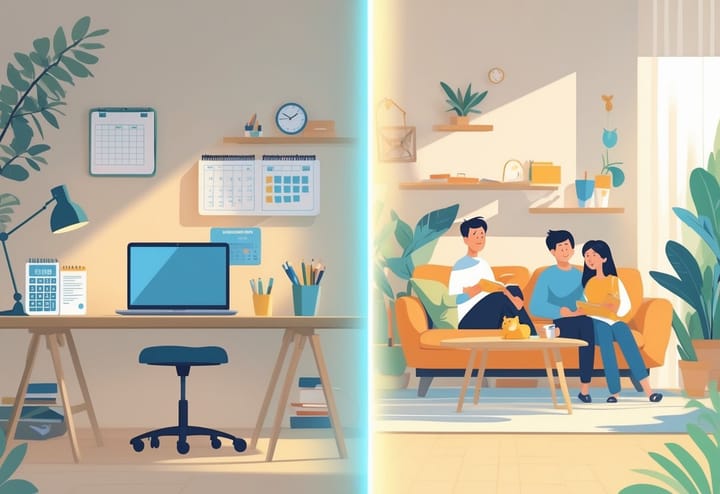
The most effective stress management technique for teachers is not something you add to your life; it is something you subtract. It is the art of the boundary.
In the US education system, there is a pervasive myth of the "Martyr Teacher"—the one who arrives at 6:00 AM, leaves at 7:00 PM, and spends their own salary on supplies. We need to dismantle this myth. Being a good teacher does not require destroying your personal life.
1. The Contract Hour Hard Stop
Set a time to leave school. If your contract ends at 3:30 PM, perhaps you stay until 4:00 PM to wrap up. But at 4:00 PM, you leave.
- The Strategy: Treat your departure time like a doctor’s appointment you cannot miss.
- The Reality: "But I won't get everything done!" Correct. You will never get everything done. The to-do list in education is infinite. Prioritize the top three tasks that must happen for tomorrow to function. The rest can wait.
2. The Email Curfew
Parents and administrators have gotten used to 24/7 access. You must retrain them.
- The Strategy: Remove your work email from your personal phone. This is non-negotiable for mental health.
The Auto-Responder: If you are worried about seeming unresponsive, set an auto-reply for evenings and weekends:
"Thank you for your email. I am currently away from my desk teaching or recharging for the next school day. I respond to emails between 7:30 AM and 3:30 PM and will get back to you within 24 hours."
3. Grading Triage
You do not need to grade every single piece of paper a student touches.
- The Strategy: Adopt the "Spot Check" method. Grade one assignment for accuracy, and the next two for completion. Use peer grading where appropriate. Your mental health is worth more than a meticulously marked worksheet that the student might toss in the recycling bin five minutes later.
In-The-Moment Stress Management
Sometimes, the stress hits you in the middle of 3rd period. The technology fails, a student is acting out, and you can feel your heart rate spiking. You can't leave the room to meditate. You need triage.
The "Zoom Out" Technique
When a classroom situation feels catastrophic, your brain goes into fight-or-flight mode.
- How to do it: Mentally "zoom out" as if you are a fly on the ceiling. Look at the situation objectively. "There is a child shouting. I am standing here. This is a moment in time."
- The Mantra: Repeat silently: "This is not an emergency." Unless there is immediate physical danger, an unruly class or a rude comment is unpleasant, but it is not an emergency. This calms the amygdala.
The 10-Second Reset
If you feel your temper rising:
- Stop talking.
- Take a sip of water. (This physically forces a pause and resets your swallowing reflex, which is linked to the vagus nerve).
- Take one slow breath before addressing the class again.
Mindfulness: Exercises for the Real World
Mindfulness in education often gets a bad rap because it’s presented as "clearing your mind." For a teacher, clearing your mind is impossible. Instead, think of mindfulness as intentional transitions.
Before School: The "Car Door" Ritual
The transition from "Person" to "Teacher" can be jarring.
- Park your car.
- Turn off the radio/podcast.
- Sit in silence for 60 seconds.
- Grip the steering wheel. Feel the texture under your hands.
- Set an intention, not a goal. A goal is "I will grade 20 papers." An intention is "I will be patient today," or "I will not let the small things ruin my mood."
- When you open the car door, you step into your role.
During Planning Period: The Sensory Grounding
Instead of rushing immediately to the photocopier, take two minutes at your desk.
- 5-4-3-2-1 Technique:
- Acknowledge 5 things you see (the clock, the poster, the messy desk).
- Acknowledge 4 things you can touch (your sweater, the cool desk surface).
- Acknowledge 3 things you hear (hallway noise, HVAC hum).
- Acknowledge 2 things you can smell.
- Acknowledge 1 thing you can taste.
- This pulls you out of the "future worry" and back into the present moment.
After School: The "Shedding" Ritual
Do not carry the heavy energy of the classroom into your home. You need a physiological signal that the work day is done.
- The Strategy: Pick a physical marker on your commute home (a specific stop sign, a bridge, or a landmark).
- The Action: When you pass that marker, turn off your "Teacher Brain." If you are worrying about a student, say to yourself: "I have done what I can for today. I am releasing this until tomorrow."
- The Change: Change your clothes immediately when you get home. It sounds simple, but getting out of "work clothes" signals to your brain that you are now off the clock.
Finding Your "Marigolds"
Jennifer Gonzalez of Cult of Pedagogy famously wrote about finding your "Marigolds." In gardening, marigolds are companion plants that protect vegetables from pests and help them grow. Walnut trees, however, release toxins that poison the soil around them.
Schools are full of Walnut trees. These are the colleagues who congregate in the teacher’s lounge to complain, gossip, and spiral into negativity. While venting is healthy, toxic cynicism is contagious.
To avoid burnout:
- Avoid the Lounge of Doom: If your staff room is toxic, eat in your classroom or go for a walk.
- Find Your Marigolds: Find the teachers who are realistic but hopeful. The ones who laugh. The ones who offer solutions, not just complaints. Stick to them.
- Seek Professional Support: There is zero shame in therapy. Teachers witness trauma, poverty, and behavioral struggles daily. Having a professional space to process that "secondary trauma" is a sign of strength, not weakness.
Conclusion: You Are More Than Your Job
We tell our students that they are special, that they matter, and that their grades do not define their worth.
Teacher, why do you struggle to believe that for yourself?
Your worth is not measured by your students' test scores. It is not measured by how beautifully decorated your classroom is. It is not measured by how late you stay on a Friday.
The most valuable resource in that classroom is you. A rested, regulated, and happy teacher is the most effective intervention strategy that exists.
So, this week, I challenge you to pick just one thing from this list. Maybe you delete your email app tonight. Maybe you take that 60 seconds in the car tomorrow morning. Maybe you just leave the grading pile for Monday.
Protect your peace. You deserve it.
If you or a colleague are struggling with severe depression or burnout, please reach out to a mental health professional or contact the 988 Suicide & Crisis Lifeline (Dial 988 in the US).